







At a glance
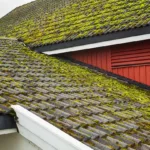
Moss and accumulated debris can retain moisture and interfere with roof drainage, but the appropriate cleaning method depends on the covering, coating and condition. Start with an inspection and the manufacturer’s maintenance instructions. A pressure washer, stiff brush or homemade chemical mixture is not suitable for every roof and can damage protective surfaces or force water into joints. This guide explains why moss develops, how metal and tiled roofs differ and what to consider before cleaning or applying a treatment. Safe access and protection of drainage are part of the work; extensive growth or damaged roofing may call for a competent specialist.
Why moss develops
Shade, persistent moisture and retained debris create favourable conditions. Nearby trees can reduce drying and deposit leaves or other material. Orientation and roof pitch influence exposure and drainage, but do not alone determine whether moss will grow.
Surface texture and finish also matter. Natural, engobed and glazed clay tiles have different surfaces, and coated steel depends on its coating. No finish should be described as immune to all biological growth.
Inspect valleys, gutters and shaded areas regularly. Removing debris using an appropriate method helps drainage and makes it easier to identify coating defects or displaced tiles.
Ask about affordable roofing sheets
Assess the condition before cleaning
Moss is not proof that a roof is structurally defective or that its owner has neglected the building. Its significance depends on moisture retention, drainage and the condition of the material beneath it.
On metal roofing, retained moisture and contaminants can affect coatings and contribute to corrosion where protection is damaged. Tiles also need clear drainage and sound surfaces; the source’s statement that moss is harmless to all ceramic tiles is too broad.
Cleaning coated metal
Follow the coating supplier’s instructions for water pressure, tools and any cleaning product. Soft brushing and suitable washing may be permitted, but aggressive pressure or abrasion can damage a coating.
Do not improvise with vinegar, salt or ammonia mixtures. Chemical compatibility and runoff matter. Use only a treatment suitable for the actual roof, with the stated application and safety instructions.
Arrange safe access and prevent water being driven under laps or flashings. A specialist service is appropriate where the slope, height or condition makes the work unsuitable for the owner.

Cleaning roof tiles
Use the tile manufacturer’s approved method. A stiff brush or pressure washer is not automatically appropriate for every ceramic surface, engobe or glaze.
Inspect cracks, loose tiles and junctions before work. Cleaning does not repair a failing covering, and a newly cleaned surface is not necessarily restored to its original condition.
Limiting recurrence
Keep drainage paths clear and address avoidable debris accumulation. Any biocidal or water-repellent coating must be compatible with the product and used according to its instructions; it does not guarantee permanent prevention.
Copper or zinc strips are sometimes proposed to limit growth. Their effectiveness, runoff and compatibility with adjacent roofing and drainage need assessment before installation. Do not assume they are suitable for every metal roof.
Continue periodic inspection after cleaning. Maintenance should preserve the covering and its protective layers, not merely change the appearance.