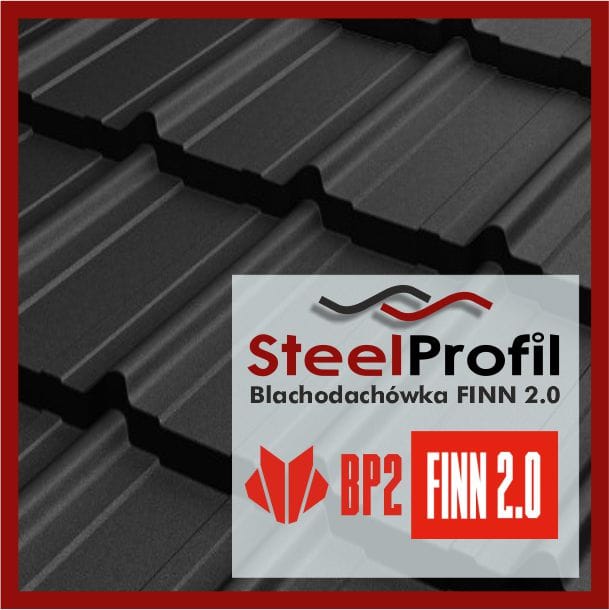



At a glance
Flat-profile tile-effect roofing sheets offer a relatively light metal covering with a restrained, tile-like appearance. They can be useful for suitable new roofs and refurbishment, but the supporting structure, roof pitch, fixing system and protective finish still need to be checked. This guide explains their main advantages, distinguishes tile-effect sheets from standing-seam panels and compares other roof coverings. Product names and warranty periods from the February 2023 article are retained as dated examples, not current offers or rankings. The final section considers economical coverings and why the condition of second-grade steel sheets must be assessed for each batch.
Benefits and design considerations
Tile-effect metal sheets are generally lighter than clay or concrete tiles. This can reduce the covering’s dead load, but an older roof still needs a structural assessment; a light covering does not prove that a weakened structure is suitable.
Flat profiles and concealed-fixing options can give a clean appearance. Whether they resemble ceramic tiles closely enough is a visual preference. IZI LOOK was the source article’s example of a concealed-fixing design.
Coated steel products may use polyester, polyurethane or other specified finishes. Available colours depend on the actual range; not every product is supplied in every RAL colour. Steel and aluminium have different substrate and protective-layer arrangements, so a steel zinc-coating description must not be applied indiscriminately to aluminium.
Sheet or modular formats can help organise installation, although detailing, cutting, handling and workmanship still matter. Weathering performance depends on the product, exposure, installation and maintenance.
The February 2023 source referred generally to warranties of 10–30 years, with longer periods on some products. Technical and appearance warranties can have different durations and conditions. Confirm the current written terms for the exact coating and application.
GET A QUOTE FOR STEEL SHEETS!
Product examples from February 2023
The source article listed several ranges supplied by different manufacturers. These examples are not a current best-product ranking or a promise of availability:
- IZI LOOK and IZI ROOF: two-module formats. The article associated Ultimat with a 30-year warranty and Herculit with a 55-year warranty, and described concealed fixings on IZI LOOK. Check the precise covered product and conditions.
- Płaska, Płaska Plus, Iryd and Tigra: examples of flat or low-profile tile-effect ranges.
- Frigge and Hyygge: the source mentioned 40- or 50-year warranty options depending on the protective finish.
- Murano and Como: tile-effect products. Prime Click and Duo Snap belong to the standing-seam-style panel comparison rather than being identical to tile-effect sheets.
- Tysenia, Estima, Navega, Savanna and Solo: further ranges named in the original comparison.
Choose using the actual profile, covering width, support requirements, finish and complete quotation. A forecast that one style will keep gaining market share is not a technical reason to choose it.
For a garage, store or temporary shelter, appearance may have a different priority from a house roof. Structural suitability and weather protection remain necessary even where low cost is the main concern.

Other roof-covering options
- Clay tiles: durable coverings in suitable systems, with individual units that can often be replaced. Their weight requires a suitable structure; the tiles do not replace roof insulation.
- Concrete tiles: another heavy tile option with product-specific finishes, dimensions and performance. Their properties are not identical to those of every clay tile.
- Tile-effect metal sheets: profiled coverings, commonly in coated steel or aluminium, with specific protection and fixing requirements.
- Trapezoidal steel sheets: an economical option for suitable applications. Profile height must follow loads, supports and product data, not roof area alone.
- Flat metal and standing seams: traditional folded-seam and proprietary panel systems in different metals. Cost and service life depend on the complete specification.
- Bituminous roofing membranes: waterproofing layers or exposed cap sheets in specified systems; they are not the thermal insulation layer.
- Bituminous shingles: shaped reinforced products requiring a suitable substrate and roof design.
- Timber shingles: a natural covering with appropriate maintenance and detailing requirements.
- Natural slate: a stone covering requiring suitable laying skills, supports and details.
- Synthetic slate: products made from different materials to provide a slate-like appearance; their weight and performance vary.
- Roofing membranes for flat roofs: waterproofing products installed as part of a complete roof build-up, not a substitute for all other roof layers.
- Straw or reed thatch: a traditional covering requiring specialist detailing and maintenance.
- Integrated solar roofs: systems combining roof-covering and photovoltaic functions. Their electrical and roofing design must be considered together.
Choosing an economical covering
Basic galvanised steel sheets can be a lower-cost option than some coated or non-ferrous metal products, but the quotation must cover the required roof rather than the sheet alone. Include supports, accessories, transport, fitting, expected maintenance and usable cover area.
Second-grade trapezoidal sheets may be useful for suitable garages, stores, shelters or temporary works. The reason for downgrading can vary. It is not safe to assume that every batch is merely slightly thicker than nominal while every other property remains identical.
Check actual thickness, finish, dimensions, damage and intended use. A lower price or less demanding appearance requirement does not remove structural or weathering requirements. Compare the complete options before deciding which is economical for the project.