







At a glance
Rooflights are roof-mounted elements that admit daylight into a building. They range from translucent sheets matching a roof profile to raised, barrel-vault, pyramid and tubular systems. Some provide ventilation, while specialist units can form part of a designed smoke-control system. The appropriate choice depends on the room, roof construction, insulation needs and expected exposure. This guide compares the main types and their materials with conventional roof windows. It also explains potential lighting benefits and why daylight, summer heat gain, structural suitability and the complete installation need to be considered together.
Rooflight types and roof windows
The main purpose of a rooflight is to bring daylight through the roof. Conventional roof windows do the same and are commonly used in habitable roof spaces, where clear views through glass and convenient opening are useful. Rooflights can be an economical option for warehouses, factory halls and other large spaces, depending on the system. Many are fixed; some include opening sections for ventilation.
- Livestock-building ridge rooflights: translucent roof areas are commonly arranged near the ridge, on one or both sides of the roof, to admit daylight into the space below.
- Raised ridge rooflights for livestock buildings: a more prominent, raised form can be combined with ventilation. The ventilation benefit depends on actual openings and the complete design, rather than the shape alone.
- Barrel-vault rooflights: curved rooflights are often used above flat roofs. Their shape encourages water runoff and can influence snow accumulation, but does not guarantee that snow will always slide off or eliminate the need to check snow loads.
- Pyramid rooflights: their sloping faces shed water. Resistance to weather and snow depends on the unit, supports and installation; the pyramid shape alone does not prove superior load resistance.
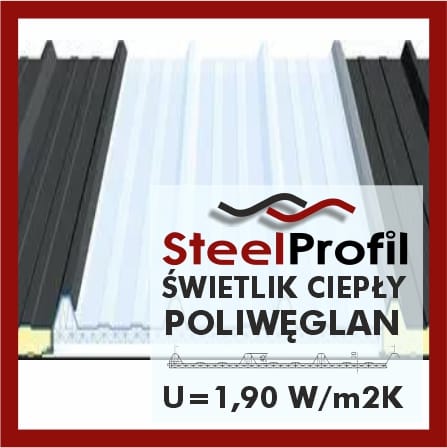
- Rooflights for trapezoidal steel sheets: translucent sheets reproduce a roof-sheet profile, including profiles described as T18 or T35. They may be made from polyester reinforced with glass fibres. Match the exact profile geometry and installation detail; a shared profile label alone does not establish compatibility.
GET A QUOTE FOR ROOFLIGHTS!
Other rooflight forms and additional functions
- Rooflights for sandwich panels: these are designed to connect with a sandwich-panel roof. Some products are suitable for both profiled steel sheets and sandwich panels, but this must be confirmed for the particular rooflight and covering.
- Flat rooflight sheets or units: simple flat forms can be used in suitable pitched-roof designs. Installation complexity and cost depend on the product and surrounding roof detail.
- Smoke-control rooflights and smoke vents: a suitably specified opening unit can form part of a designed smoke and heat exhaust system. An ordinary opening rooflight does not automatically fulfil this role. Venting other harmful substances likewise requires a purpose-designed system and an assessment of the substances involved.
- Solar-control or “Heat-Stop” options: certain products offer layers or finishes intended to reduce solar heat gain. These can be useful where extensive roof glazing and strong sunlight would otherwise overheat spaces occupied by people or animals, or used to store goods. Such options are product-specific and cannot be assumed available for every rooflight.
- Tubular rooflights: a reflective tube carries daylight from a roof-mounted collector towards a room that is harder to illuminate directly. The tube route and system design affect the delivered light.
Rooflight materials and roof weight
Many rooflights use translucent plastics such as polycarbonate, polyester or acrylic, while other systems use glass. Plastic glazing can offer low weight and an economical solution compared with some glass assemblies; the actual comparison depends on the product.
Breakage behaviour also differs between materials and glazing constructions. Plastic should not be treated as harmless, unbreakable or safe to walk on. The required overhead-glazing and fall-protection provisions need to be assessed for the exact installation.
Weight is particularly relevant to lightweight halls and warehouses. A conventional glazed window may require support that the existing roof does not provide. Check the complete unit, opening and structural arrangement rather than assuming that any lightweight rooflight can be fitted without assessment.
When is a rooflight worth considering?
Daylight can improve the usefulness and comfort of an interior, particularly where wall windows cannot bring light far enough into the space. Its benefits need to be balanced with glare, solar heat gain and the building’s thermal requirements. Plan the lighting for the activities and people using the room.
Rooflights can reduce the need for electric lighting during suitable daylight conditions. Actual electricity savings depend on the daylight available, operating hours, lighting layout and whether artificial lighting is switched off or dimmed in response. Any associated reduction in greenhouse-gas emissions also depends on the electricity supply. Savings are therefore a project-specific possibility, not a guaranteed fixed outcome.


Choose a rooflight for the complete roof
Roof windows and rooflights can both bring useful daylight into a building. Choose between them according to the room’s purpose, the roof construction, views, opening requirements and the required thermal performance.
Profile-matched rooflights for trapezoidal steel sheets or sandwich panels may provide a practical and economical solution. They are not automatically the cheapest or simplest option for every roof. Compare the complete installed cost, including supports, connections, weatherproofing and any ventilation controls. A suitable, documented system offers a firmer basis for selection than price alone.