







At a glance
Roof drainage needs to collect and discharge water without damaging the building. Metal and PVC gutter systems can both perform that task when properly selected, installed and maintained. They differ in weight, protective finishes, temperature movement, handling and cost. The best choice depends on the complete roof and drainage arrangement rather than a universal rule that one material is always more durable or cheaper. This guide compares the main considerations and explains historical model examples, while keeping manufacturer warranties separate from general material properties and avoiding a claim that every named product remains available today.
Comparing plastic and metal
PVC systems are often light and competitively priced. Their joints must accommodate temperature movement, and the product must be suitable for its UV exposure and mechanical loads. Snow or ice can damage an inadequately designed or supported arrangement. These issues are product- and installation-specific, not proof that all plastic gutters are short-lived.
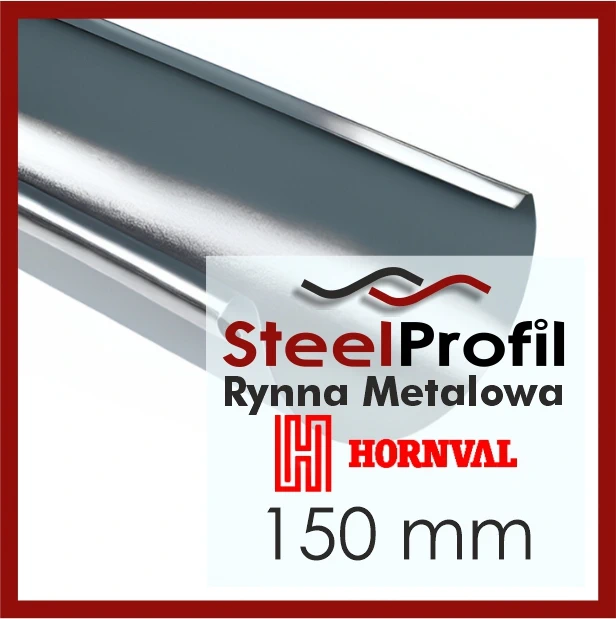
Metal gutters can offer useful stiffness and repair options, but their weight, price and installation method vary. Steel systems require appropriate corrosion protection, such as a metallic coating and, where specified, an organic finish. Coloured finishes add design choice. Rain noise also depends on the roof, supports and building context.
Aluminium systems offer a different combination of low weight and material properties. Concealed gutter arrangements can create a clean roof edge, but their drainage, access and maintenance details still need to be designed.
GET A QUOTE FOR GUTTERS!
Product examples from the 2022 article
The article of 22 June 2022 listed several system families. These examples describe the range of choices, not the present SteelProfil assortment or a ranking:
- Niagara: round and square coated-steel options, with separately named Tytanium and titanium-zinc variants. Confirm the actual metal specification rather than inferring it from the name.
- Half-round and square steel or PVC systems, galvanised finishes, titanium-zinc options and concealed systems from other manufacturers.
- Rainline and Square: examples of half-round coated-steel and square arrangements.
- Round, Square and Modern: examples of conventional profiles and a concealed gutter design.
- Zenith and Wijo: product families with specified metallic or organic finishes, including the named Prelaq Nova finish in the original comparison. Check the exact variant.
- Flamingo, Flamingo Magnelis and Flamingo Satin: different steel-system finishes; Proaqua: a PVC alternative. The source’s 40-year and ten-year warranty examples, including a stated saline-exposure condition, are historical product-specific terms. Magnelis concerns the protective coating, not an assertion that the steel core is simply mixed with magnesium.
- Struga and Quattro: examples of coated-steel and suspended gutter arrangements.
- INGURI: the original description specified 0.6 mm steel with an organic or aluminium-zinc finish and a 30-year warranty. Treat those as particulars of the cited offer, not universal gutter specifications.
- Krop: PVC square and half-round, steel half-round and concealed options described in the article.

Decide using the roof and written specification
Compare capacity, outlets, connections, finish, installation, maintenance and actual warranty conditions. A familiar model name does not guarantee the same result on every building. Choose the complete compatible system and its drainage route, rather than assuming satisfaction from the material or manufacturer alone.