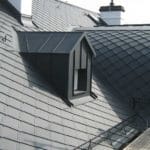
Aluminium can be a useful roofing material where low weight, formability and a suitable finish are important. Roofing products generally use specified aluminium alloys rather than treating all aluminium sheets as identical. Compare the alloy, coating, thickness, fixing system and intended exposure before choosing a product. A lighter covering can reduce the roof’s dead load, but it does not repair a weakened structure or remove the need for assessment. This article compares aluminium with other roofing metals and explains appearance, corrosion resistance, warranty and maintenance considerations without assuming that every aluminium roof performs in the same way.
Metal-roofing alternatives
- Steel: commonly galvanized or finished with organic coatings such as polyester or polyurethane. Aluminium-zinc-coated and stainless-steel products are also available. Their properties and price depend on the particular specification.
- Copper: a traditional material on historic buildings, valued for its appearance and developing patina. Its cost and long-term performance must be assessed for the actual system.
- Aluminium: a low-density metal that can provide lightweight roofing products.
- Titanium-zinc: a roofing metal that develops a patina. A general estimate of 100 years is not a guarantee for every product or roof.
GET A QUOTE FOR STEEL SHEETS!
Advantages and limits of aluminium roofing
Aluminium combines formability, low density and corrosion resistance. Alloying adjusts its mechanical and other properties. Aluminium alloys may contain elements such as copper, magnesium, manganese, silicon, nickel, zinc, chromium or titanium in different combinations, but this does not mean all such alloys are suitable for roofing. Check the exact product specification.
- Low structural load: aluminium is less dense than steel or copper. The source’s comparisons of more than twice and roughly three times the weight refer to material comparisons; actual roof weight also depends on thickness and profile. A structural assessment remains necessary, especially on an older building. A lighter covering does not restore damaged supporting members.
- Appearance: aluminium roofing is available in various colours and coatings, including polyester finishes. Products may also have a natural metallic appearance or a transparent protective finish.
- Corrosion resistance: aluminium’s surface oxide layer and suitable coatings contribute to performance. Exposure and the specified system still matter.
- Warranty: the source mentions some product warranties of 40 or 50 years. These are model- and condition-specific, not a universal warranty for aluminium roofing.
- Maintenance: do not interpret a durable finish as requiring no inspection or care. Follow the manufacturer’s maintenance instructions and use appropriate professionals for roof work.

Aluminium for roofing, gutters and façades
Aluminium is used for tile-effect sheets, trapezoidal profiles and other roof-covering formats. It can be a suitable long-term choice when the product, fixing and detailing fit the building.
The same material is also used for lightweight gutter and façade systems. Compare complete, compatible solutions and their technical documentation rather than choosing solely by the word “aluminium”.