



At a glance
Sandwich-panel thickness should match the building’s use, indoor temperature, core material and required performance. A 60 or 80 mm panel may be considered for an unheated building or one kept at a lower temperature, but neither is automatically suitable for every garage or warehouse. Heated buildings need the U-value of the actual product, while cold stores also require carefully designed airtight and vapour-resistant joints. This guide compares common thicknesses, explains the limits of the source’s numerical examples and considers the accessories and operating costs affected by thickness. The complete design, rather than a single number, determines the appropriate panel.
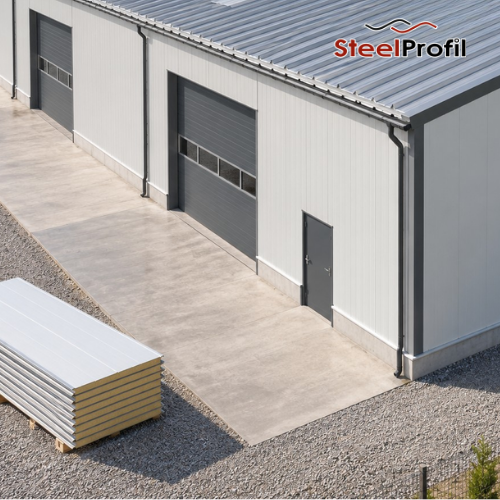
Can 60 mm suit an unheated garage or store?
A 60 mm panel may be considered for a simple unheated building, intermittent heating or a low internal temperature, subject to the project. In such uses, protection against weather and rapid cooling can have a different priority from a continuously heated workplace.
Even an unheated building may experience condensation, large temperature changes, process moisture or moisture carried in by vehicles. Future heating or a change of use should also be considered.
Compare the specification and expected operation before selecting a lower-cost thin panel. The description “unheated garage” does not remove structural, moisture or fire requirements.
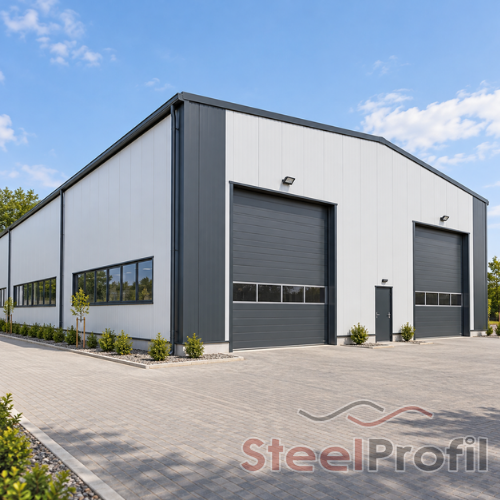
When to compare 100 mm panels
A 100 mm panel is a useful comparison point for some workshops, warehouses and buildings used through much of the year. It is not a universal answer.
The source’s illustrative documentation gave approximately Uc=0.22 W/(m²·K) for a 100 mm PIR wall panel and 0.21 for a 100 mm PIR roof panel. It compared these with target values of 0.20 for a wall and 0.15 for a roof in its Polish design context. The examples do not prove that another 100 mm product has the same values or meets the applicable requirements.
Assess the complete element, joints, thermal bridges and intended use. Any permitted project-specific economic assessment or exception must be established for that project rather than assumed.
The same source comparison gave about 0.39 W/(m²·K) for 100 mm EPS and mineral-wool examples. Equal thickness therefore does not mean equal thermal performance across cores. Use the declared values for the actual products.
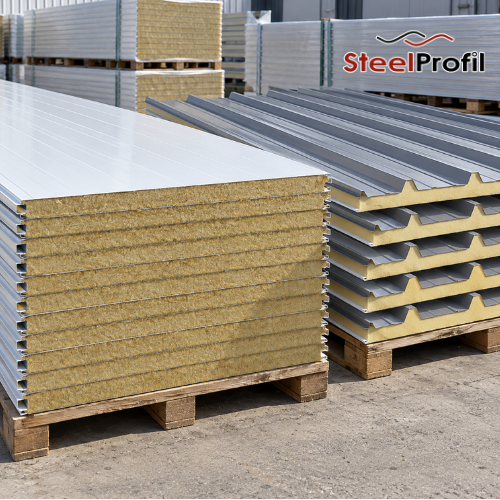
What changes at 120 mm?
Increasing thickness within a given system generally improves thermal resistance. The source’s PIR examples gave approximately Uc=0.18 W/(m²·K) for both 120 mm wall and roof panels. This is below its 0.20 wall comparison target but above its 0.15 roof target.
A 120 mm wall panel can therefore be a starting point for evaluating a heated hall, workshop or production building, while the roof may require a different solution. Confirm the actual product, indoor conditions and applicable design requirements; the source used a temperature of at least 16°C for its standard heated-building comparison.
Year-round heating, stable internal temperatures, large wall areas, long service and difficult future upgrading may support a higher-performance choice. 120 mm can still be unnecessary for one unheated store and inadequate for a particular cold store.
When to consider 145–150 mm or more
Greater thicknesses are often compared for heated roofs, refrigerated buildings and energy-sensitive applications. Choosing 150–200 mm by price alone is insufficient.
Cold-store design also needs suitable panel joints, floor insulation, wall-to-roof connections, vapour control, doors and structural thermal-bridge details. Thickness alone does not solve those issues.
Is the thickest panel always best?
No. A thicker suitable panel may improve thermal performance, but it can add unnecessary cost where the requirements are modest. It also affects fixings, flashings, opening and plinth details, weight, available lengths and transport.
A panel that is too thin for the project can increase energy use, make temperature control harder and contribute to colder surfaces. Condensation risk depends on the complete details and indoor conditions. Later upgrading can be difficult or costly.
The most economical choice is the product that meets the project’s requirements at a reasonable purchase and operating cost. Use the actual panel documentation rather than treating the example values as a universal thickness table.
Ask about materials for your project
Tell us which material you need, the quantity and delivery location. The SteelProfil team will help prepare an offer for your inquiry.
Phone: +48 500 409 109
REQUEST A QUOTE!


