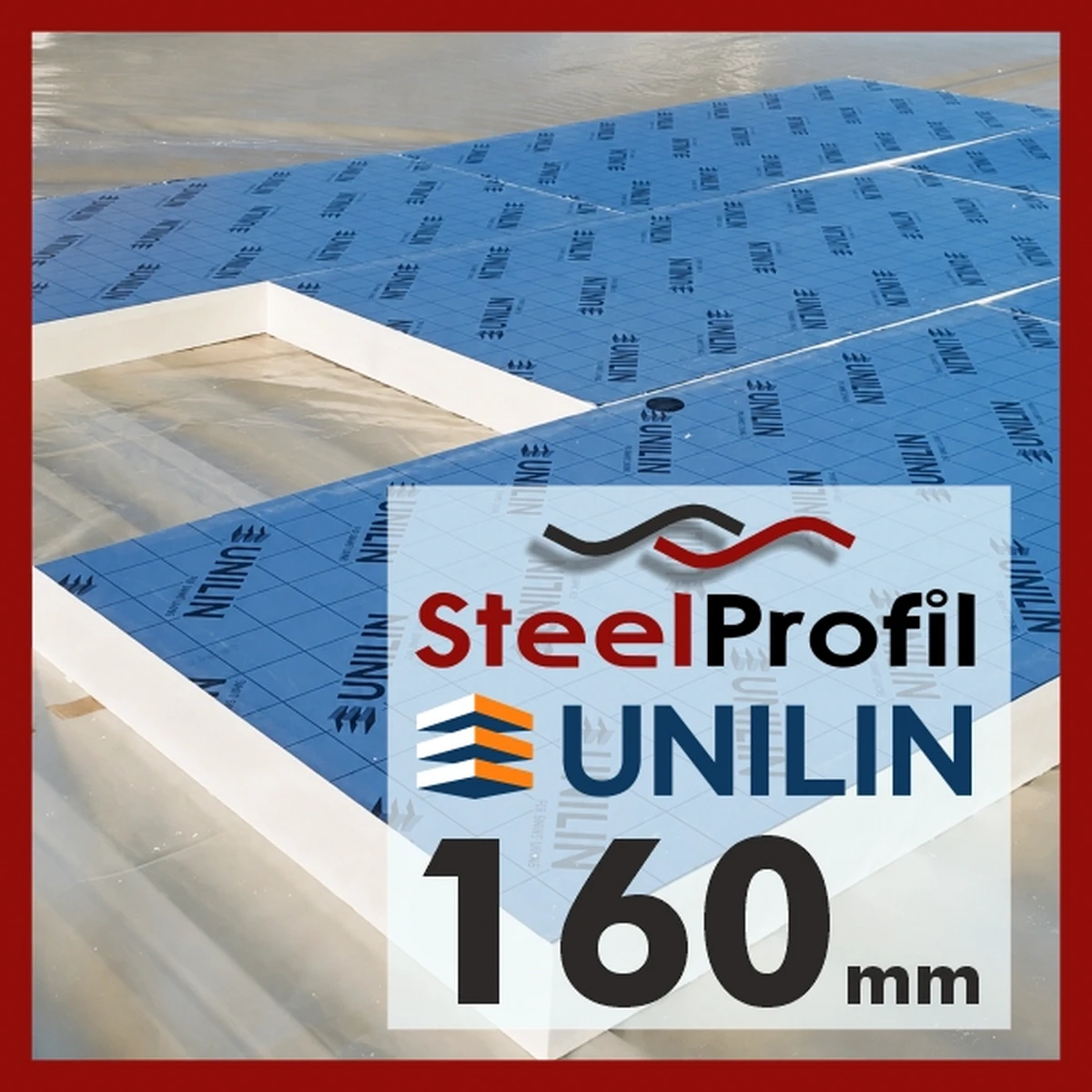



At a glance
PIR insulation boards contain rigid polyisocyanurate foam and are supplied with different facings, thicknesses and edge details. Their low declared thermal conductivity can be useful where a compact insulation layer is needed, but the exact product must suit the roof, wall or floor. Thermal performance, loading, moisture protection and fire requirements are separate checks. This guide explains those distinctions, compares PIR with other insulation materials and considers installation, dimensions and costs. It does not treat every PIR board as a metal-faced sandwich panel, waterproofing layer or universally superior replacement for EPS, XPS or mineral wool.
What to check when choosing PIR
PIR means polyisocyanurate. It belongs to the rigid-foam insulation family, but the name alone does not specify the facing, strength, dimensions or intended use. Bare or faced insulation boards must be distinguished from metal-faced sandwich panels.
Compare the product’s declared thermal conductivity and resistance at the chosen thickness. A low conductivity can reduce the thickness needed for a particular insulation resistance, but the complete construction still determines its U-value.
Handling weight, compressive performance, edge shape and fixing method also matter. Tongue-and-groove edges are one option; they are not present on every board and do not eliminate every thermal bridge.
GET A QUOTE FOR INSULATION BOARDS!
Thermal performance and joint detailing
Use declared values for the actual board and facing. A figure from one PIR range must not be transferred to another product merely because both contain rigid foam. Product-family names do not establish a universal conductivity or required thickness.
Fit boards and joints according to the specified build-up. Gaps, penetrations, supports and fixings can affect the complete thermal result. Adhesives, tapes and joint fillers must be compatible with the facing and substrate.
Insulation reduces heat flow; it does not stop it completely. Heating and cooling demand also depend on the rest of the building, air leakage, ventilation and operation.

The illustration is retained from the original article. Compare current declared values for the exact products and thicknesses; the graphic is not a substitute for a project-specific specification.
Applications in roofs, walls and floors
PIR products are available for different building applications. Choose the variant intended for the actual assembly rather than assuming that any board can be used everywhere.
- Pitched roofs: coordinate the insulation with supports, roof underlay, air and vapour-control layers and any required ventilation.
- Flat roofs and terraces: check the waterproofing system, mechanical loading, drainage and board compatibility.
- Walls and façades: use a complete compatible system with suitable fixing, moisture and fire details.
- Floors: check design loads, compressive and long-term behaviour, screed compatibility and moisture protection.
A low-conductivity board can be helpful where space is limited. That advantage does not remove the need for the specified thickness, supports and detailing. Available lengths and widths should be matched to the layout to limit unnecessary cutting.
Installation as part of a system
Prepare the substrate and keep materials in the required condition. Make joints and penetrations carefully and protect the boards during subsequent work. The exact installation method depends on the facing, application and system instructions.
Lightweight boards can be convenient to handle, but large sheets, work at height and exposed sites still require suitable handling arrangements. Ease of cutting is not evidence that every installation is an unskilled DIY task.

Compare PIR, EPS, XPS and mineral wool
EPS and XPS are different forms of polystyrene insulation. PIR can offer a lower declared conductivity than some alternatives, but compressive performance must be compared product by product. It is incorrect to assume that PIR always carries higher loads than XPS or every other insulation material.
Compare boards at the required thermal resistance and intended loading, not just at equal thickness. Fire behaviour, moisture conditions, acoustic requirements and compatibility with the assembly can change the preferred choice.
Moisture and fire are separate design checks
Limited water absorption does not make an insulation board a waterproofing layer. Protect the assembly against the actual moisture exposure and assess condensation where necessary.
PIR is not universally non-combustible or guaranteed to retain structural integrity in a fire. Reaction-to-fire classifications apply to specified products and conditions; fire resistance is assessed for the relevant assembly. Select the documented construction required by the project.
Dimensions, cost and transport
Confirm the available dimensions, thicknesses, quantities and facings. Compare purchase price with transport, waste, compatible accessories, installation and the complete insulation performance. A higher initial price does not automatically guarantee a shorter payback period.
Plan delivery, storage and handling to prevent damage and wetting. Lightweight material can simplify logistics, but transport and site costs still depend on the order and access.
Documentation and energy requirements
Obtain the declaration and technical documents for the actual product, together with any relevant system classifications. A generic claim about certificates or EU directives is not proof that every board meets every building requirement.
Appropriate PIR insulation can contribute to an energy-efficient building. Compliance and performance follow from the complete design and execution, not the material name alone.