









At a glance
Whether a roof refurbishment in Poland requires notification, a permit or neither depends on the actual work, building and protection status. Replacing a covering, altering structural members, adding an opening and changing roof geometry are not automatically the same legal activity. This guide develops the December 2022 source into a practical planning checklist and corrects its blanket statements. It covers classification, documents, the notification process and the choice of covering and drainage. It is not a determination for a particular property or a guide to another country’s law. Confirm the current procedure with the competent authority and designer before starting work.
Define the planned work first
Describe the existing condition and the intended change: covering only, structural repairs, new windows, a different pitch, changed volume or a new use of the attic. These details affect both technical design and procedure.
Check the building’s legal status, local planning requirements and heritage protection. A replacement covering can also change weight, wind behaviour or the roof build-up, so it needs more than an appearance decision.
Prepare a scope and cost plan before engaging the work team. The correct procedure follows the actual proposal, not the title “roof renovation” used in an advertisement.
GET A QUOTE FOR ROOFING MATERIALS!
Maintenance, repair and alteration
Polish building law distinguishes routine maintenance, restoration of an existing condition and work changing technical or functional parameters. The source incorrectly suggested one automatic procedure for every covering replacement or new roof window.
Some work is exempt from both permit and notification, some requires notification and other work requires a permit. Building type, structural and external-envelope work, the scope of influence and statutory exceptions matter.
A change in volume or geometry should not automatically be called a simple repair. Likewise, a new opening or an attic-use change needs assessment of its actual consequences.
Heritage protection
Work on an individually registered monument and work in an area entered in the register are subject to specific, different requirements. The necessary conservation approval is not merely an informal positive opinion.
Establish the protection status before selecting a covering or changing the roof shape. A general guide cannot replace the required project-specific consent.
Prepare the appropriate submission
First confirm whether notification is the correct route. Describe the type, extent and method of work and the intended start date. Provide the declaration of the right to use the property for construction purposes and the drawings, design or other approvals required for that case.
Submit the documents to the competent authority for the location, using an accepted procedure. Keep evidence of delivery and respond to any request to complete the documentation.
The notification period
For work under the ordinary Polish notification procedure, the authority has a 21-day period to object. The applicable starting point and any interruption connected with missing documents matter. Do not treat a defective submission as an unconditional permission to start after a date in the calendar.
A certificate of no objection may allow an earlier start where the law provides for it. Carry out only the work covered by the valid procedure and observe the relevant time limits.
Completion and further requirements
Do not assume that every roof repair needs a new occupancy permission or completion notification. Determine the obligations for the actual work and any connected change of use.
Keep the design, correspondence and acceptance records. If the scope changes, check the consequences before proceeding.

Select a compatible covering
Local planning and heritage requirements may constrain colour, shape or materials. Check them before ordering. The covering must also suit pitch, support, loading and local weather exposure.
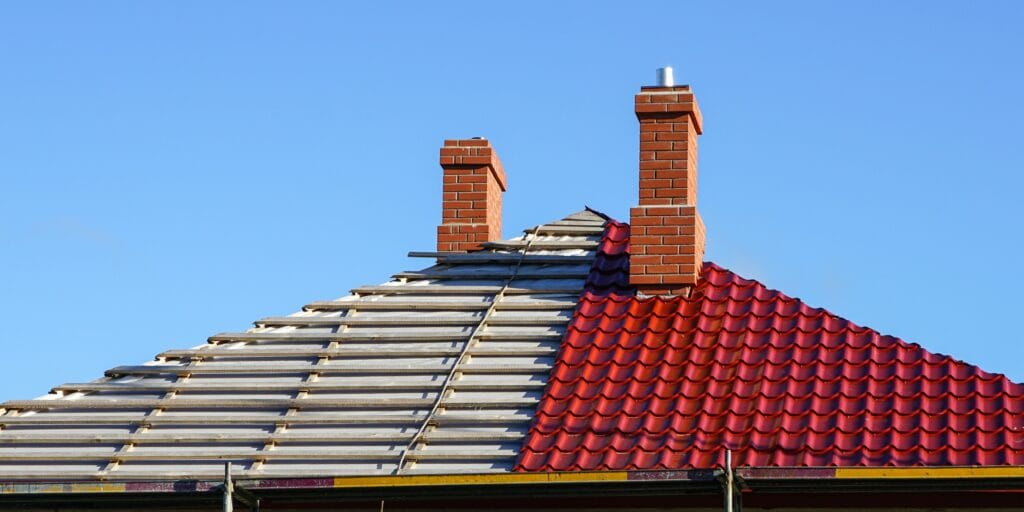
Tile-effect steel sheets, standing-seam systems, clay tiles and bituminous shingles have different requirements. A covering is not itself the whole thermal-insulation system. Compare the complete build-up, accessories, maintenance and installation.
The SteelProfil shop presents available product families. Confirm the actual specification and quantity for the project rather than choosing only by appearance.
Plan the work and avoid avoidable errors
Inspect the existing structure before fixing the scope. Agree the design, procedure, materials, contractor responsibilities and schedule. Check relevant experience and completed work.
Allow for access, temporary weather protection, protection of the building and surroundings, removal and disposal. Do not leave legal requirements or concealed defects to be resolved after the roof has been opened.
Monitor the work at sensible stages, especially before covering junctions and structural repairs. Maintain communication with the contractor and record agreed changes.
Consider future needs, such as planned roof equipment or attic use, without making unapproved alterations now. No planning process can guarantee that every unforeseen condition will be eliminated.
Repair or replace the gutters?
Assess leaks, deformation, corrosion, loose joints and the condition of downpipes and outlets. A sound system with a limited defect may be repairable; widespread deterioration or unsuitable capacity may justify replacement.
Age is one factor, not the sole criterion. Material, installation, exposure and maintenance determine performance. Plastic systems are not automatically inferior to every metal system, and a new product is not automatically more efficient.
If roof geometry or drainage areas change, reassess gutter sizes, falls and outlet locations. The presence of a new window alone does not automatically determine a new drainage capacity.
Compare repair and maintenance costs with replacement, including compatible supports and connections. Appearance can matter, but the system must first discharge water correctly.
Accept and maintain the finished roof
Check the agreed work, drainage, flashings and accessible details. Retain product information and the records relevant to later inspection or a complaint.
Plan appropriate maintenance and safe access. A successful refurbishment combines the correct procedure with a suitable design and careful execution; a general promise of lasting value is not a substitute for those steps.