


At a glance
Standing-seam metal can be used on façades as well as roofs when the chosen system is designed for that application. Raised joints give the surface a clear rhythm, usually with narrow vertical strips, although some panels also allow horizontal layouts. The result can suit both modern and more traditional buildings. Selecting a façade means considering the metal, coating, joint, support and drainage details together. This guide explains folded seams, click panels and cassettes, their practical advantages and the differences between cladding and insulation. Product examples illustrate available approaches rather than a guarantee that every roof panel is suitable for a wall.
What does a standing-seam façade look like?
Adjacent strips meet at a raised seam, creating the characteristic folded line. Vertical installation is common; horizontal arrangements depend on the panel and its approved installation method.
Joint arrangements include open joints, single folds and double folds. Single-fold details are used in façade work, while double standing seams are common in roof applications. The correct detail depends on the system and exposure. An open joint in a designed drained or ventilated façade must not be judged simply as a defective version of a closed roof seam.
Other façade panels and cassettes use snap-fit or “click” joints. They can simplify assembly, but the connections, supporting structure and fixings still have to follow the manufacturer’s instructions. A panel that clicks into place is not automatically a complete weatherproof wall.
GET A QUOTE FOR STEEL SHEETS!
Advantages and design considerations
- Appearance: the restrained lines can complement contemporary or traditional architecture.
- Cost: metal cladding can compete with other finishes, depending on material, geometry and installation.
- Installation: made-to-length strips and pre-cut panels can reduce work on site. Coil-formed strips still have practical limits; the 6–8 m panel lengths mentioned in the original article are examples, not a universal range.
- Durability: steel, aluminium, titanium-zinc and copper have different properties. For coated steel, metallic and organic protective layers are part of the specification.
- Colour: coloured coatings offer many finishes, while copper and other metals have their own appearance. A steel sheet with a decorative coating is not the same material as a copper panel.
- Weather protection: cladding helps shield the wall from rain, but joints, ventilation and drainage must be designed correctly.
- Thermal performance: metal cladding is not an insulation layer. The wall’s insulation and complete build-up determine its thermal performance.
- A coordinated roof and façade: using compatible products on both surfaces can simplify the visual design and ordering, provided they are approved for both applications.

Examples of panel and cassette approaches
The article named several manufacturers’ products to illustrate the range of solutions:
- Terrano IZO: a roof and façade panel promoted with acoustic and thermal-inertia features; assess those claims in the specification of the exact system.
- T-Panel: a wider roof and façade panel with a strongly profiled appearance.
- Retro: a traditionally styled panel, with vertical or horizontal façade use subject to its installation instructions.
- High-Tech: a snap-fit roof and façade panel designed to address stresses in the sheet.
- K1 and K2: façade cassettes with straight and angled joint arrangements respectively.
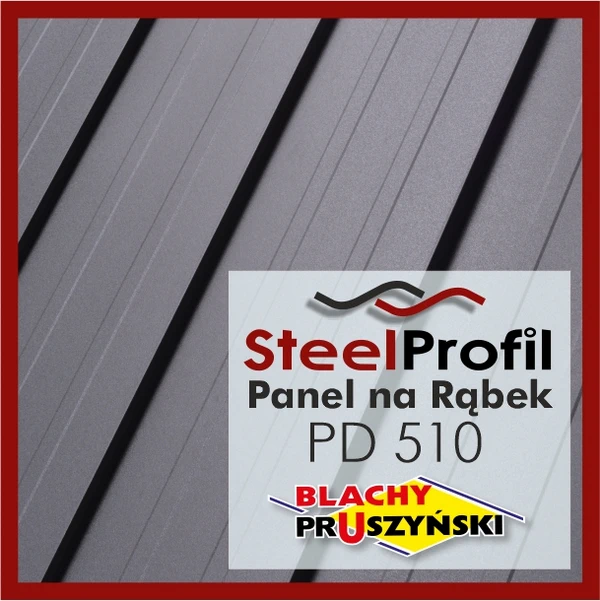
- PD510: steel roof and façade panels offered in different versions.
These model examples are not a statement of current SteelProfil stock or a transfer of their performance to other products. Coating options differ in price and warranty terms. The original article’s reference to warranties of up to 60 years applies only where a specific manufacturer’s written conditions support it.
Choose a panel or cassette for its appearance and its suitability for the wall design. If the same visual system continues onto the roof, confirm both applications and the junction details before ordering.