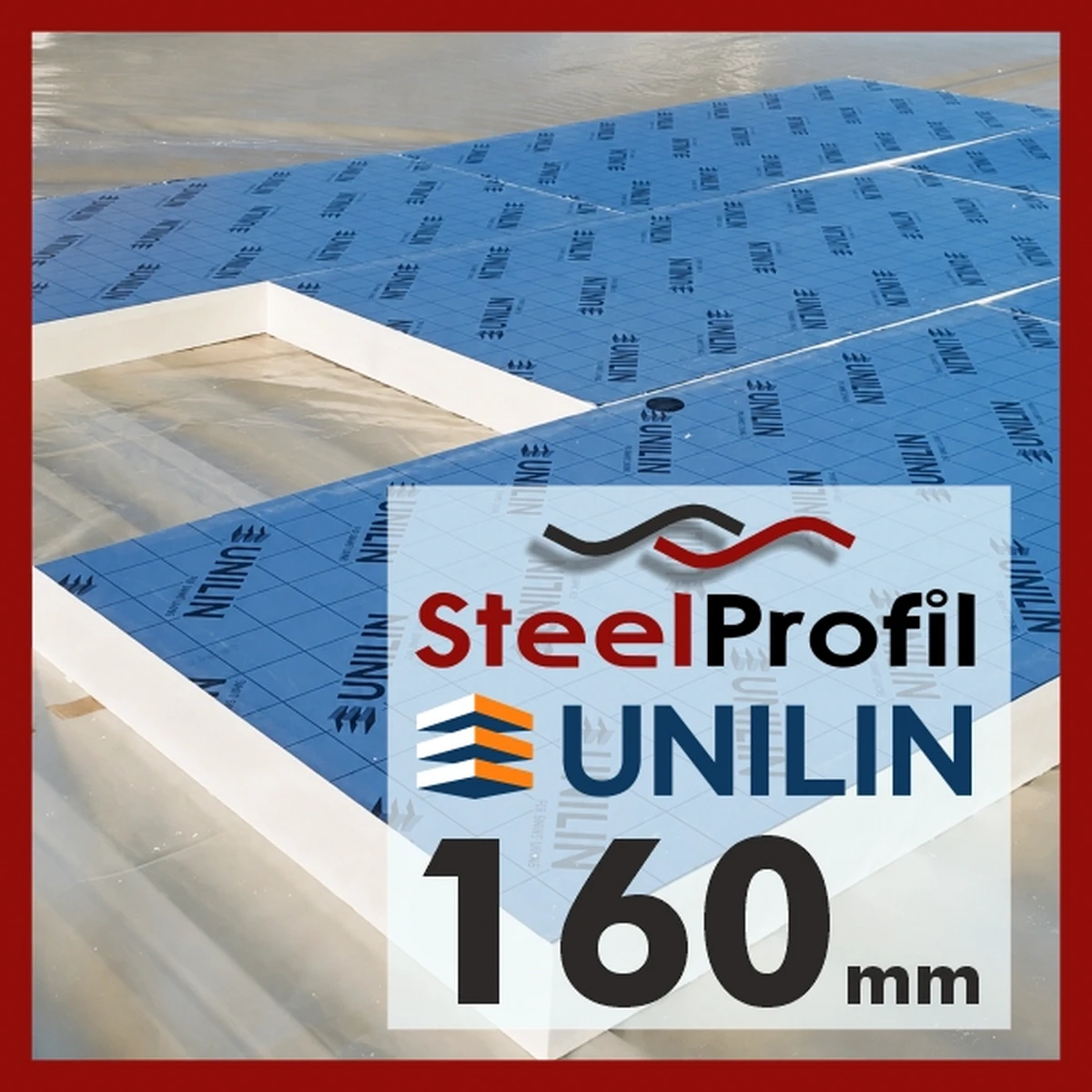



Thermano PIR insulation boards

At a glance
Thermano is a PIR insulation-board product family. Appropriate PIR boards can provide high thermal resistance with a relatively thin layer, but that does not make them a universal replacement for mineral wool or EPS. The selected product must suit the roof, wall, floor or other application, including fire, moisture and loading requirements. This guide revisits the April 2016 comparison and separates historical examples from general material claims. It explains the potential benefits of above-rafter insulation and the limits of statements about water uptake, temperature and strength. Use current documentation for the exact board and complete construction before specifying it.
Thermal comparison and applications
The source compared 120 mm of PIR with 200 mm of mineral wool or 190 mm of EPS. Such an equivalence depends on the actual conductivities and does not apply to every product in those families.
Roof, wall, floor and foundation uses require suitable product variants and details. PIR is not automatically the best option for every application, and neither rodents nor insects can be assumed to avoid all foam insulation.
The source’s claims of universal solvent resistance and non-combustibility are not valid general specifications. Check compatibility and the declared fire performance for the actual product.
Thickness, window reveals and cost
A lower conductivity can reduce the thickness needed for a given material resistance. This may help where deep window reveals or limited space are a concern.
It does not mean that 120 mm of PIR always replaces a 200 or 250 mm layer in a low-energy or passive-house design. The complete element, junctions and target performance must be calculated.
The source’s claim that domestic production brought PIR prices close to good mineral wool described its historical market context. It is not a current price comparison or proof that other materials have become obsolete.
Above-rafter insulation
A continuous layer above rafters can reduce the thermal interruption caused by timber in a between-rafter layer. Fixings, edges and openings still need thermal and moisture details.
This arrangement does not eliminate every bridge or remove ventilation requirements. Follow the designed roof build-up, including air and vapour control.
GET A QUOTE FOR PANELS!
Chemical exposure and moisture
Resistance to chemicals depends on the foam, facing, chemical, concentration and exposure. The source’s claim that PIR withstands any building chemical is too broad. Agricultural buildings also need suitable linings, joints and cleaning compatibility; no core material alone proves suitability.
A vapour-resistant facing can form part of a designed vapour-control layer when its joints and connections are completed correctly. It does not justify omitting required control layers in every roof refurbishment.
The source quoted water absorption of no more than 2% after 24 hours and a conductivity change of approximately 0.0018 W/(m·K) after 28 days’ immersion, against a dry value of 0.023. These are historical test claims whose exact product and method are not established in the article. They are not a general foundation specification or proof of waterproofing.
Durability and temperature
The article referred to tests of 28- and 33-year-old polyurethane insulation. Results for particular old samples do not certify the lifetime or performance of every Thermano board.
It also gave a service range of −70 to +140°C and a short-term figure of +240°C. Do not adopt these as universal limits for the board, facing, adhesive or complete construction. Use the current product documentation and exposure conditions.
Compression and tensile properties
Compressive stress at 10% deformation [kPa] is a test characteristic. The source’s approximate 150 kPa example is not a permissible long-term floor load, and compressing a 100 mm board to 90 mm is not a serviceability design.
For tensile strength perpendicular to the faces [kPa], the source quoted more than 200 for its board example. Its comparison with more than 10 [kPa] for an unspecified wool product does not establish the performance of every wool board or the resistance of a complete roof to wind uplift.
Assess the exact declared properties, long-term deformation, fixings, substrate and complete assembly. A material-test value cannot replace a structural or wind-load calculation.
Fire behaviour
PIR can form a char layer when heated, but this does not make it non-combustible or guarantee evacuation time. Reaction to fire and fire resistance are different classifications, and the complete construction must meet the specified requirements.
Select insulation from documented performance rather than a claim that one material is universally safe.