At a glance
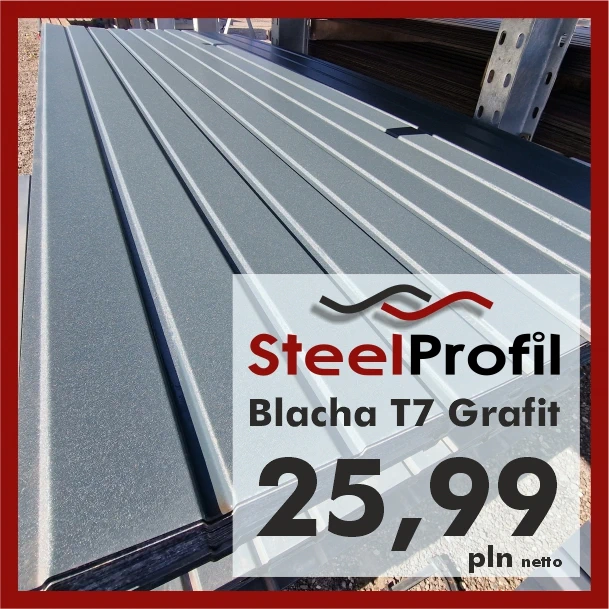
Trapezoidal steel sheets have raised profiles that give the sheet its characteristic appearance and influence its stiffness. They are used for suitable roof and wall cladding on homes, outbuildings and industrial buildings, as well as other applications specified for the product. Profile names such as T7, T14, T18 and T35 identify different ranges, but a name alone does not establish structural capacity or suitability for a roof. This guide explains how profile geometry, steel thickness, protective finish, supports and installation work together, and which details to confirm before ordering sheets for a particular building.
Profiles for different buildings
Trapezoidal steel sheets are available in different profile heights, lengths and finishes. These choices can help match cladding to an outbuilding, warehouse or production hall. A roof and a façade may require different versions and installation details, even when their profile names look similar.
T7, T14, T18 and T35 are examples of profile designations, not manufacturing technologies or a guarantee that every version is suitable for roofing. Confirm the exact geometry, effective cover width, thickness and intended application.
Appearance and protective finishes
Colours and profile shapes influence the appearance of the finished roof or wall. Galvanised steel is a common base material; additional protective finishes vary between products. Choose the corrosion protection and coating for the exposure and maintenance requirements, alongside the preferred colour.
GET A QUOTE FOR STEEL SHEETS!
Where T18 and other profiles can be used
A suitable T18 sheet may be specified for roof or wall cladding. The product documentation, support spacing, fixings and anticipated loads determine its capacity; T18 is not automatically a load-bearing solution for a large industrial hall.
- Warehouses, garages and shelters: roof and façade applications need appropriate support and weathering details.
- Agricultural and industrial buildings: check the exposure, cleaning needs and complete cladding specification.
- Gates and fences: sheets can form infill where the frame, wind loading and fixing arrangement are suitable. The sheet is not automatically a substitute for the supporting structure.
Profile height contributes to stiffness, but cannot establish a permitted span or load on its own. Use the tables for the actual sheet and support arrangement.
Protection, installation and finishing
Protective coatings and correctly detailed joints help the cladding withstand its intended exposure. Warranty terms apply to the particular product and conditions; they do not guarantee every installation against all weather or damage.
Installation requires suitable skills and accurate work. Select fixings and seals for the sheet, support and exposure. Follow the specified laps, fastening pattern and edge details. Competent installation supports performance, but does not remove the need for structural design.
Ridges, verges, eaves and other flashings affect both appearance and water management. Profile fillers must fit the actual geometry and their intended function. Fillers do not by themselves create full structural stiffness or eliminate every leak risk.
Inspect cut edges, coatings and completed junctions as specified for the system. The complete roof or façade, rather than the sheet alone, provides the intended protection.

Ordering dimensions, quantities and delivery
Specify the profile, finish, lengths and quantities for the actual roof or wall layout. Supplier advice can help identify available options, while the project design establishes the technical requirements.
The January 2023 article described made-to-length orders, delivery across Poland and ready-stock sheets at four branches. That is a dated description of the offer, not a current branch or stock count. Confirm available lengths, collection points, transport arrangements and lead time when ordering.
A clear quotation should identify the exact sheets and accessories included. Match the delivery plan to safe handling and storage on site so that the cladding can be installed in the intended condition.