
Free quote
SOLROOF integrated solar roof
Standing-seam roofing that generates electricity
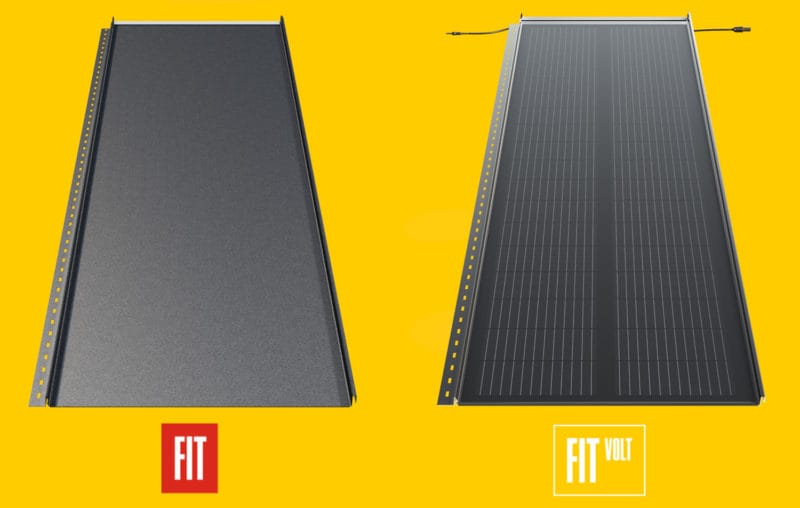
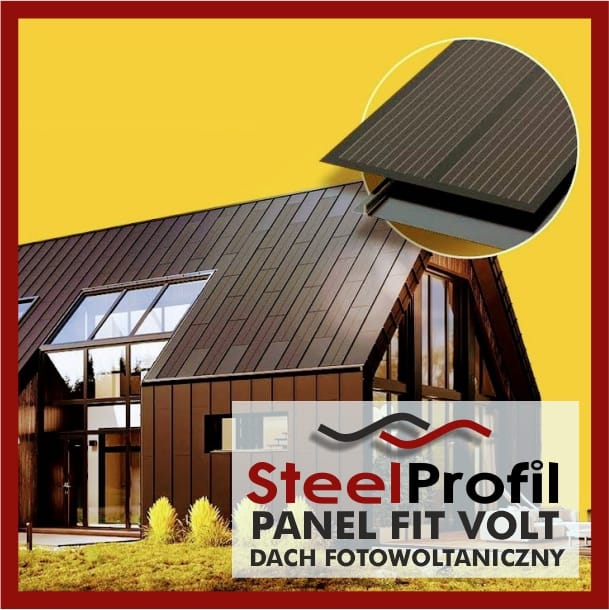
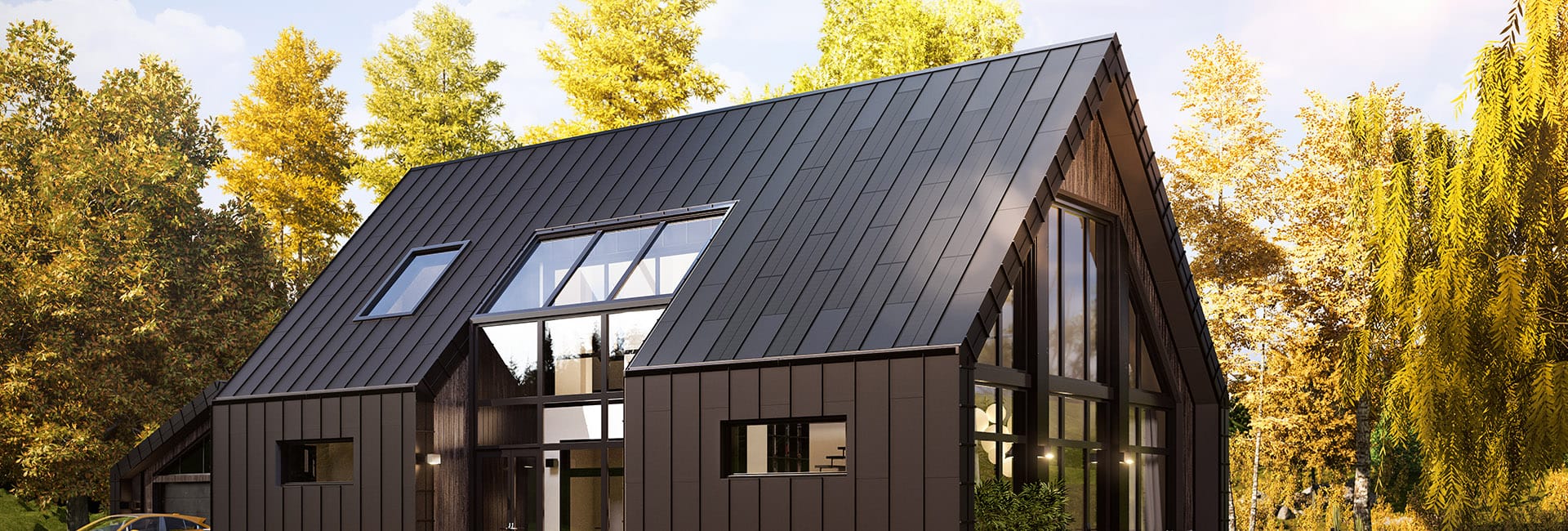
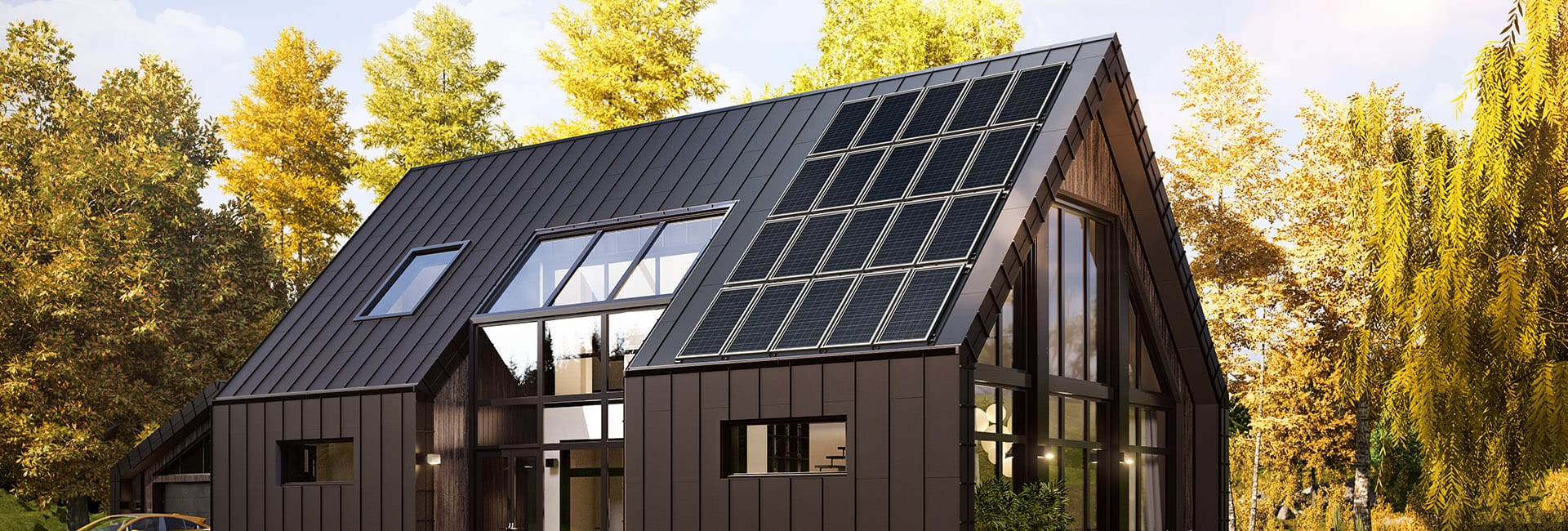
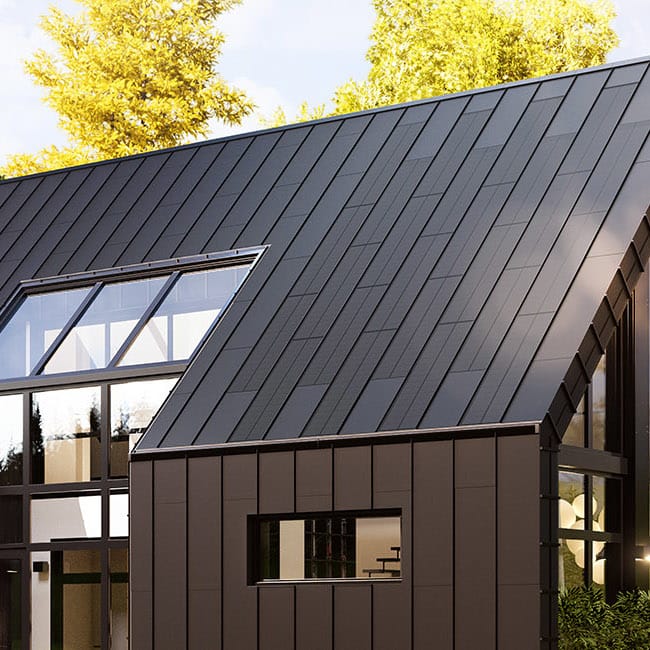
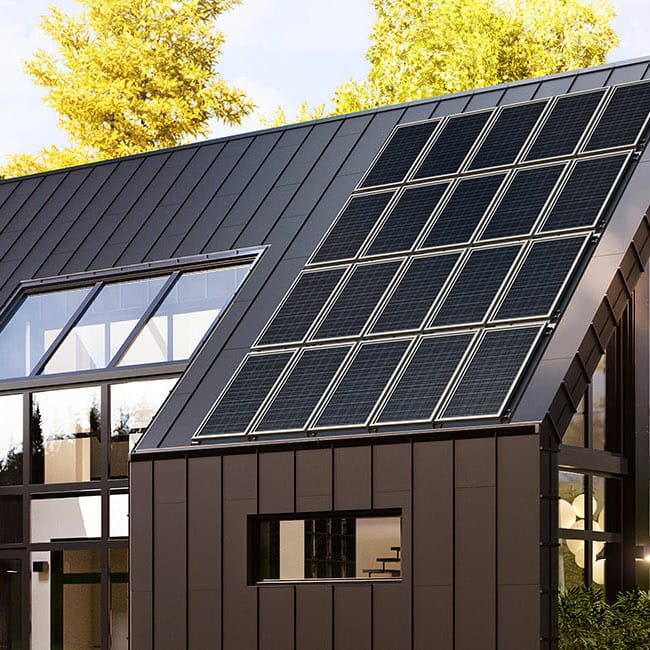
SOLROOF combines a standing-seam steel roof with photovoltaic panels. FIT VOLT panels generate electricity, while matching FIT panels cover areas where solar cells are unnecessary or impractical, such as roof edges and details around openings. Both form part of the roof covering. This page shows how the panels fit together, how the electrical components work and what to include in a quotation. The dimensions and output in the technical tables refer to the 175 W FIT VOLT panel listed by SteelProfil. A roof plan lets the designer determine how many active panels will fit on your building.
Free quote
Using electricity from the roof
Solar cells within the roof covering
Matching active and passive steel panels
The photovoltaic surface follows the same standing-seam profile as the adjacent FIT steel panels. It leaves the roof planes visually continuous and keeps most connections out of sight. The designer can use passive panels around penetrations, shaded areas and roof edges. Electricity from active panels can supply household loads, a heat pump or an EV charger when generation and demand coincide.


Warranty periods for the roof and electrical components
Check the warranty card for the system in your quotation
The manufacturer lists 30 years for the steel roofing components under the standard terms and 12 years for the FIT VOLT module as a product. The power warranty is a separate 25-year commitment. The published periods for optimisers and inverters are 25 and 12 years respectively. Start dates, registration, exclusions and coating-specific conditions are set out in the applicable warranty card.
Electrical output and safe operation
Power optimisation at module level
Roof layout and shading affect the energy yield
Power optimisers allow the system to manage individual modules and help limit the effect of uneven shading. Shade and dirt can still reduce generation. The inverter converts direct current from the roof to alternating current. Where the specified SolarEdge configuration supports SafeDC, it reduces DC voltage under defined shutdown conditions. Roofing and electrical work must follow the instructions for the selected components.


Monitoring your solar roof
Production and consumption in the app
The monitoring platform can show energy production and, with suitable metering, how much electricity the building uses and exports. Available information depends on the installed devices and their configuration.


Features of the integrated roof

Roof appearance

Continuous standing seams

Materials

European manufacture

System components

Coordinated installation

Warranty documents

Service access

Energy yield

Installation and operation
System monitoring

Weather resistance
Project funding

Insurance

SOLROOF Hub

SOLROOF Care
FIT VOLT technical data
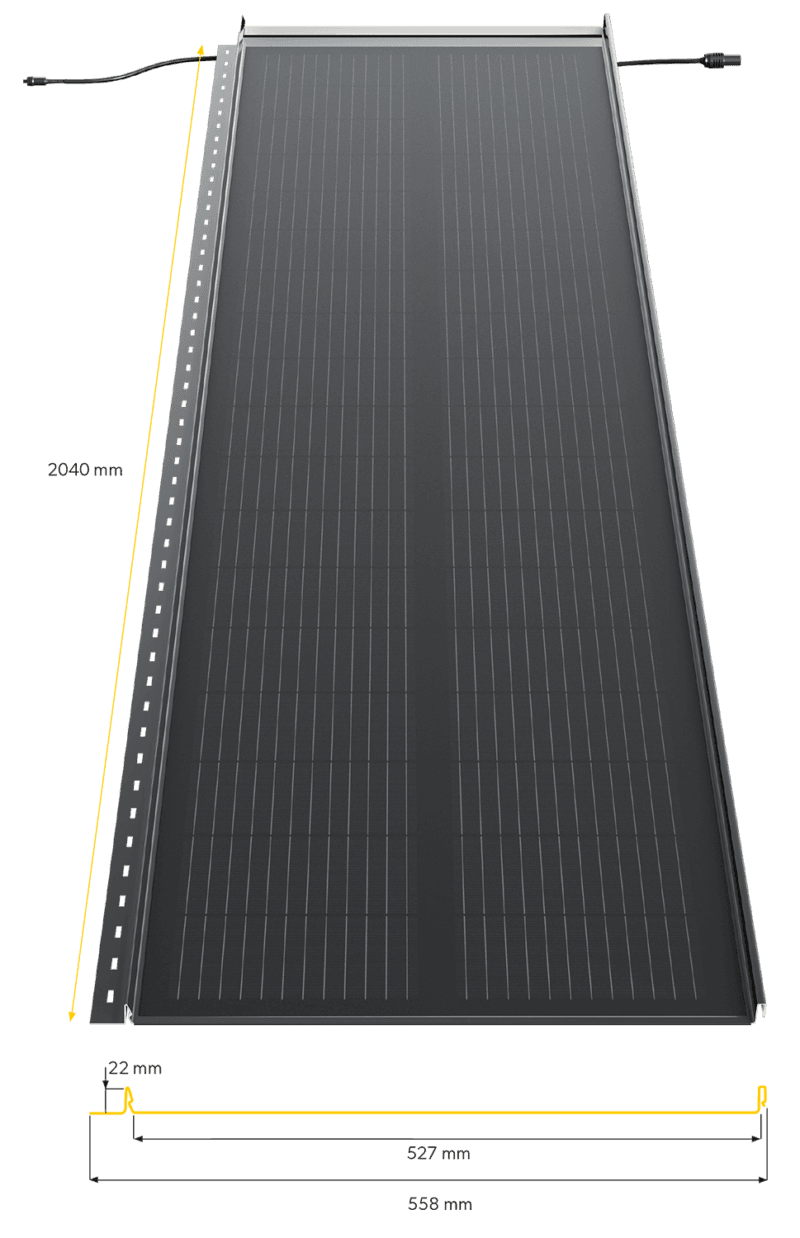
Specifications for the 175 W panel in the SteelProfil catalogue. Check the model specified in your project before applying these dimensions or roof pitch limits.
| Model | FIT VOLT |
| Number of cells | 36 |
| Rated output (W) | 175 |
| Open-circuit voltage (V) | 24 |
| Seam height (mm) | 22 |
| Overall width (mm) | 558 |
| Cover width (mm) | 527 |
| Steel thickness (mm) | 0.5 |
| Sheet length (mm) | 2040 |
| End lap for a joint (mm) | 30 |
| Roof pitch (°) | >15 |
How the SOLROOF system works
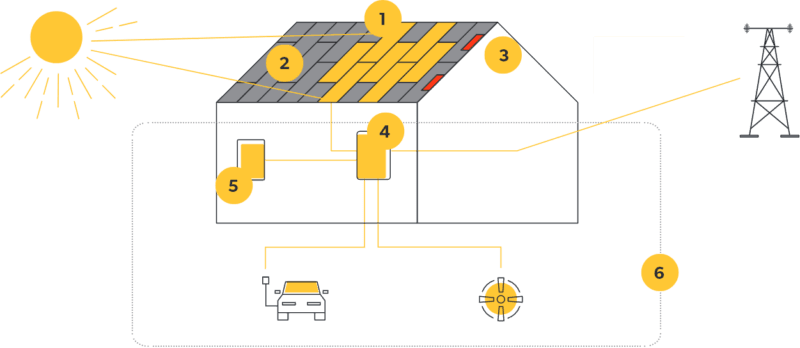

App controls

FIT VOLT

FIT

Power optimiser

Inverter

Battery storage

SOLROOF Hub
How FIT and FIT VOLT fit together
The active and passive panels share a modular format. Their formed edges align the standing seams, while the end details join consecutive panels along the roof slope. The layout must account for the eaves, ridge, penetrations and the space required for wiring. The installation instructions for the particular panel and roof detail determine the permitted joints and fastening method.