







How steel is produced and made into coated sheet
At a glance
Steelmaking controls the composition of an iron-based alloy so that it can meet a required specification. Carbon content, other alloying elements and later processing influence properties such as strength, formability and corrosion resistance. Producing liquid steel is only one stage: casting, rolling, heat treatment and coating follow according to the finished product. This guide separates the historical Bessemer process discussed in the November 2009 source from modern production routes. It is a general explanation of manufacturing, not a recipe for making a particular steel grade or a claim that every roofing sheet follows one identical sequence.
Composition and refining
Steel is not made by simply removing every element and then adding the same mixture back. Refining adjusts carbon and unwanted constituents to the intended grade; controlled alloy additions and deoxidation help achieve the required composition and cleanliness.
Manganese, chromium, nickel and vanadium are examples of elements used in different steel families. Their effects depend on amounts, interactions and processing. They are not all added to every roofing steel, and carbon does not give every grade the same heat-treatment response.
The historical Bessemer process
Introduced in 1856, the Bessemer process was a major step towards rapid, large-scale steel production. Steel existed long before it, so it should not be described as the first successful method of making steel.
Air was blown through molten pig iron in a refractory-lined converter. Oxidation reduced carbon and other constituents and generated heat. Subsequent composition adjustment helped obtain a useful steel. The source’s detailed charging, tilting and additive sequence is not a universal operating recipe.
Modern routes and finishing
Two major routes are the blast-furnace/basic-oxygen route and electric-arc-furnace steelmaking. Their feed materials and operations differ. Secondary refining provides further composition and quality control before casting.
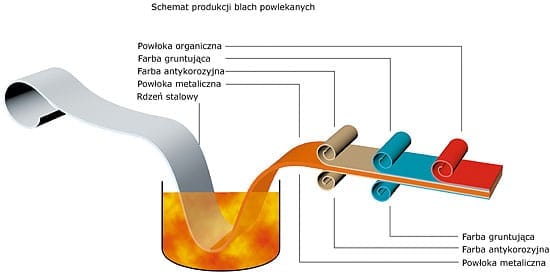
Cast material is then processed into the required forms, which can include rolled strip. Further treatments may include cold rolling, annealing, metallic coating and organic coating. These are separate stages, selected for the final specification.
For roofing and cladding, the finished steel sheet must meet the required thickness, grade, surface and forming conditions. See the information on coated steel sheets for the subsequent product context.
Ask about materials for your project
Tell us which material you need, the quantity and delivery location. The SteelProfil team will help prepare an offer for your inquiry.
Phone: +48 500 409 109
REQUEST A QUOTE!